 E.g. The inverter-generator can produce 4.8KVA (4800 watts), but what you get to use is 4000 watts.
Appliance and generator figures are approximate. Warning: prices are subject to inflation.
Many carry-around-with-one-hand generators sold today are really 'toys' which would struggle to run anything meaningful in the average kiwi home. The people selling them are more in sales than in the business of best informing the buyer.
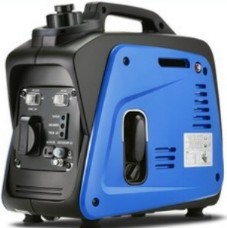
A typical 'suitcase-type' generator.
However, they do have their uses. They are light enough to be a one-adult-person lift, so reasonably portable and should run one fridge or freezer. Quite possibly two and a light bulb. Or charge a phone, or tablet, or laptop computer. (See later chart about appliance ratings.)
With one of those sized inverter-generators, forget about running a kettle, toaster or a microwave!
Fuel tank top-ups could be frequent and some of those of that size which are available are not that expensive. Certainly good for camping out for a few days. A potential disadvantage for some people is that few such inverter-generators have a battery start - only pull-cord.
What follows is not driven by any sales or like motive and relates mostly to 4-stroke petrol-engine-powered generators supply 230 / 240 volts AC (alternating current) electricity, as is standard in New Zealand. The sort of thing needed to keep a household running during an emergency when no mains power is available for a day or two.
A word of caution about fridges and freezers when a generator is needed to keep them working. An hour or so a day of the generator running is unlikely to be sufficient. With an inverter generator, it is likely better to run it for 2-3 hours, at least twice-a-day, to ensure fridge and freezer contents do not spoil.
A 'standard' generator is suitable for quite a few electrical appliances which have no electronics components. That includes most vacuum cleaners, kettles, portable circular saws, most fridges, freezers and older toasters.
Because it doesn't produce what's called smooth electricity, a 'standard' generator is not suitable for appliances which have any electronics parts to them such as certain fridges, washing machines, dish washers, chargers, freezers and some modern toasters.
Caution: using a 'standard' generator to power household items with electronic components risks causing them irreparable damage. Many LED light bulbs have an electronic 'starter' in them and most modern, plug-in battery chargers are electronic. Computers, as well.
If the house has a good, suitably-sized Uninterruptible Power Source [UPS], that may be used between the standard generator and such electronics-equipped devices, because a good UPS also acts as a spike / surge protector against a 'rough' electricity supply.
An inverter-generator is suitable for all electrical appliances and devices, including any that have electronic components. Such a generator will power everything in those earlier lists.
What's with this 'rough' and 'smooth' diffference?
More often-than-not, a 'standard' (two-pole) generator produces what's called 'rough' electricity. Something that electronic devices do not like. An inverter-generator produces 'smooth' electricity, quite suitable for electronic equipment.
A 'standard' four-pole generator is better than a two-pole, but they are generally not available in NZ. A few modern (two-pole) generators may have a 12 volt DC outlet and the common USB-type outlet. They should be O.K. for charging electronic devices, but they are outside the scope of this article. (Caution: the 12 volt DC outlet will not charge a car battery.)
Diesel generators are regarded as the best for a long life of regular use - whether standard or inverter-type. They are rarely portable and always more expensive than petrol-powered generators. Not ideal for a being-prepared for a just-in-case civil emergency scenario.
An inverter-generator is more expensive than a standard generator of the same output. (Output = electrical load-bearing ability or the number of electrical appliances it can keep working at the same time.)
At the right setting, an inverter-generator automatically alters the operating speed of the petrol motor, depending on the load (number of appliances) it has to keep working at any given moment. It's fuel consumption varies according to the speed that it's motor is running at, so is more economical to leave running. Most will drop back to an idle if there is no load at all. (Later in this article, you'll find a fuller description of the settings options for inverter-generators.)
A 'standard' generator must run at a constant (quite fast) speed, no matter the electrical load (number of appliances) it has to keep working. It's fuel consumption is more-or-less the same, continuously, whether or not it has any appliances to keep working, or none at all. Just like a car climbing a hill, the more appliances the generator is running, the harder it's working and the more fuel it will use.
All generators are sold with two output (load) figures. The smaller figure is the constant load it can manage - the number of electrical appliances it can keep working at the same time. The larger figure is a peak load. A "peak load" is the over-and-above-normal electricity demand that occurs when an electrical appliance motor first starts. ("motor" includes fridge compressors.) Such does not apply to electrical appliances which just have elements, like a toaster or kettle. Warning: all sales pitches always quote the biggest figure - the smaller one is found later! (See later section under How Big To Buy?)
In most long-period, no-mains-power emergency domestic home situations, usually the fridge, freezer, or fridge/freezer are the most critical items to keep working. Because it's thermostatically-controlled, a fridge or fridge/freezer 'cycles.' I.e. It turns itself OFF and ON depending on the temperature inside it. If thoughtfully managed (the door remains closed all night), a fridge, freezer or fridge/freezer can usually be left with no generator-supplied electricity over-night, until first thing the next morning.
An easily overlooked risk for an emergency home-use generator owner is the fuel needed to run it. Although NZ petrol has not in the past been subject to deterioration (going stale) in storage, the Marsden Point refinery closure may change that for the worse. Having stocks of fuel will be important but so will not allowing it to 'go stale.' Every six months or so, empty the stored fuel container in to a car and refill the container with fresh petrol - no matter that day's at-the-pump cost.
Petrol stabiliser additives are available. Carefully evaluate their life-extending claims. Claims are made of from 1 - 3 years! When not in use, it's good to keep only a small amount of fuel in the generator tank. Another important but less critical aspect is having replacement oil for the engine crankcase.
In any serious, widespread, long-duration, no-mains-power-available emergency, many things outside the house which are taken for granted may not be available. So devices which use them will not need charging or re-charging. Communication networks may stop being available. That may include all telephones. (Satellite phones may be excluded). There may be no EFT-POS, no e-banking and so buying and selling (when possible) would need to be in cash or barter. That includes for generator fuel! Unless using Starlink (which can be run off a generator), there may be no Internet access, too.
There is always a cost to having and maintaining any suitable-for-the-home civil defence emergency kit. A generator and fuel to run it will likely be the biggest expenses. Having extensions cords and power boards will be important, but most households have such things.
Most larger (household-load-capable) generators available in 2022 / 23 come with a battery, so offer an electric start, but have a pull-cord starter if the battery fails or is absent. To keep it fully functional, a for-the-home civil defence emergency generator should be started and run, at least once every six months, for at least long enough to boil water in an electric kettle plugged in to it. That will also put some charge in to the starter battery.
Bigger is better. And more expensive! Generators are output-rated and over-talked! When you start looking, "what the hell is KVA," will be your first question. It's a generator jargon expression that indicates the electrical power the generator is capable of producing. However, all that power is not what you get! You get the amount of electrical power that's available at the end of an extension cord. Some of the generator's power output is consumed in the internal, inverter workings and pushing the rest of the power to the end of the extension cord. The longer the extension cord, the less electrical power gets to the end.
The KVA number is always bigger than watts you get.
E.g. The inverter-generator can produce 4.8KVA (4800 watts), but what you get to use is 4000 watts.
However, the KVA numbers are a generally reliable means of comparing generators when checking and comparing prices. One thing that may surprise you is that bigger does not always mean a more cost effective purchase price! (Using cost per KVA-output).
All electrical appliances in NZ have their power-consumption-wattage marked on them, somewhere. An average (2 slice) toaster is around 1500 watts. An average kettle is around 2000 watts. An average fridge or freezer will likely be around 100-150 watts, each. If all are running at the same time, add up the watts.
| Appliance | Rating |
|---|---|
| Fridge | 120 |
| Freezer | 130 |
| Toaster | 1500 |
| Kettle | 2000 |
| Total | 3750 watts |
In theory, a 3750 watt continuous output generator would manage all that at once. But only in theory. There will be power losses in the extension cords running to inside the house. Also, the fridge and freezer may need double their wattage (peak load) for a few seconds when they first start. (If the generator is OFF overnight, then a first-thing-in-the-morning start-up generator load of every appliance could be around 4000 watts. Do not do that! However, some extra margin is good, if it's affordable because it means the generator is not working hard, all the time.
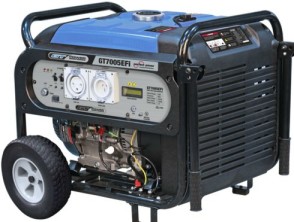
Some larger household generators come with wheels and fold-down handles, making them easier to move around, like a wheebarrow.
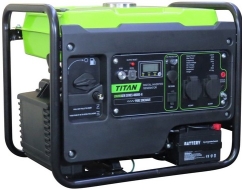
Above is a typical NZ-available 4000 / 3500 watt (4.8 - 4.2 KVA) inverter-generator with 2 x three pin outlets costing around $1,600 (in early 2023, $1700 in May) and it would power those appliances listed in the table above, but only with thoughtful management. That being what's turned on and when. It is the very best practice to start the generator with nothing plugged in to it or, with all it's power-supplying switches OFF.
An example. Once the generator is running, plug in or turn on one three pin outlet with the fridge at the end of the extension cord. Then, 10 seconds later, if it's a stand-alone unit, add the freezer. Next, the jug. When it's boiled and switched OFF, use the toaster. Instruct all household users that the kettle and the toaster must not be turned on at the same time while they are using the generator.
Check the back to see it's wattage rating to understand if and when the microwave oven can be used. Have a list of the wattage of all the appliances you're likely to use and manage the generator load accordingly.
★ WARNING! Many larger generators (of a size that you need to run an average household) have one oddly configured socket, only suitable for a plug which few - if any - NZ households will have, so is quite unsuitable for normal NZ-households-3-pin-plugs.
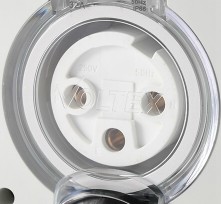
That socket-plug-cable combination is used for high-load-carrying (32 amp) extension leads and other types which allow for up-to-double the 'normal' amount of electricity to be delivered to double the number of appliances at the end of the (special, heavy-duty) extension cord.
The maximum loading for a normal, NZ household three pin socket and plug is 15 amps. To illustrate: from the watts listed in the earlier table for a toaster and kettle, the total of 3500 watts = 15.2 amps. A 15 amp cicuit breaker will just possibly cope with that 0.2 amp overload.
An adapter will be needed if you want to use that oddly configured socket with a standard 3-pin plug appliance or extension cord. I could find no such off-the-shelf thing available in NZ. Such an adapter will need to be made.
I earnestly suggest you have such an adpater made by an electrician. A botched DIY job made with as much ignorance as with the best of intentions could kill someone! Or 'fry' a much needed appliance like the fridge or freezer.
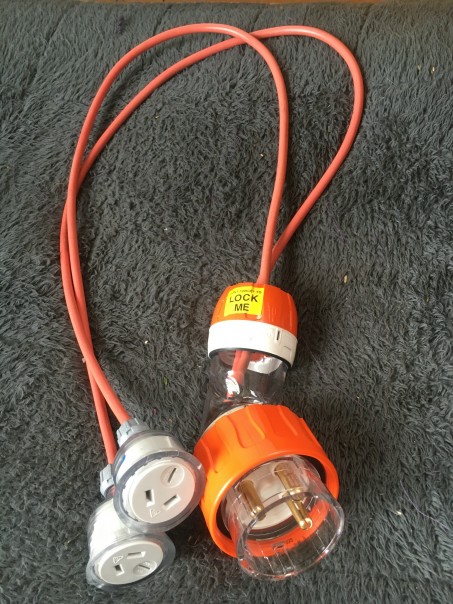
Above is an example. That odd-looking-plug is not the same as a caravan supply plug.
☀ Some (if not most) generators come with overload circuit breakers for their protection.
☀ Some generators have an 'earth pin connector' that you could utilise when using hand-held appliances, outside, on the ground. Especially if there's the slightest chance that one person might be holding a metal-sheathed appliance in each hand, each one being connected to a separate outlet on the generator and each appliance simultaneously develops a special-but-different fault. You can judge the likelihood of that! (Double insulated appliances don't need such a safeguard, but, if your risk tolerance is low, utilise the earth cabling feature if you can easily do so.)
☀ Here, I'm discussing revolutions-per-minute (rpm) - the speed at which the engine is running. The faster the speed usually means faster fuel consumption. Inverter generators usually come with a switch that toggles between load-related (or load-management, or ECO, sometimes with a turtle symbol) and full speed (sometimes with a rabbit symbol). When starting from cold, always use full speed option, then switch to eco or load-related, after some seconds of the generator engine warming up.)
☀ If you're interested and the know-how would be useful to you, sales staff who really know their job will usually provide greater technical details. The author has found the staff and service at Riequip to be hard-to-beat.
Last revision, January 2026
The author has three home-use, stand-by / emergency generators.
1) A petrol, EFI inverter-generator, single phase, 7 / 6.5Kva, unfortunately now with erratic load management.
2) A petrol-powered inverter-generator, single phase, 4.8 / 3.5Kva, with load management.
3) A petrol-powered, dual voltage, standard generator being 8.8 / 7.3 Kva three phase (400 volts) and 4.2 / 3.5 Kva single phase (230 volts). No load management.
All have battery and pull cord starters.